
ANNULAR VELOCITY CALCULATIONS
Annular Velocity Calculator
| Parameter | Value |
|---|---|
| Annular Velocity (Va) | ft/min |
• Annular velocity calculation per API RP 13D (24.51 constant)
• Minimum flow rate: 1 gpm, hole diameter: 1 in, drillstring diameter: 0.1 in (API RP 13D)
Annular velocity calculations
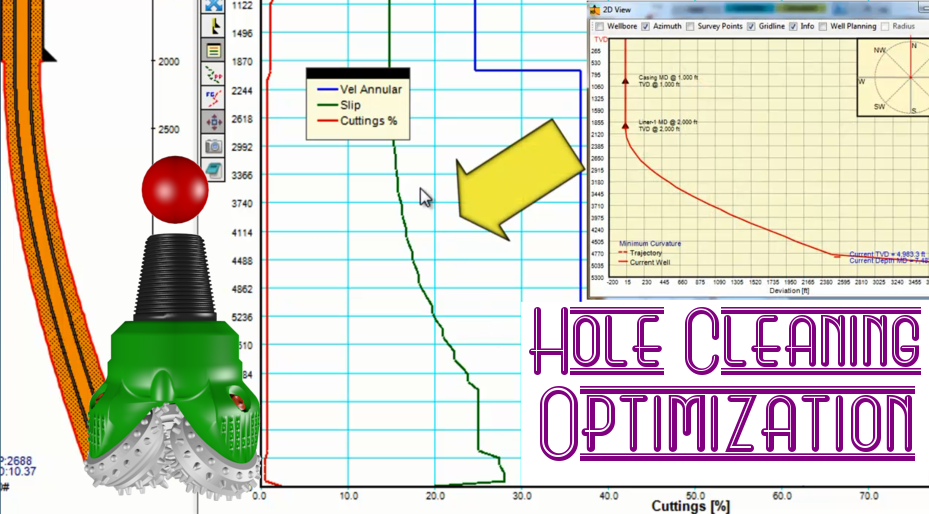
Imagine you’re out on a drilling rig, the sun beating down, and your team’s just punched through a tough layer of rock. The drill bit is spinning away, but to keep things moving smoothly, you need to pump drilling mud (or fluid) down the hole at the right speed. Too slow, and those rock cuttings from the bit just sit there, clogging everything up. Too fast, and you risk blowing out the well or wearing out your pumps. That’s where flow rate calculations come in—they’re like the heartbeat of the operation, ensuring the fluid circulates efficiently to cool the bit, carry away debris, and maintain pressure balance.
.
In simple terms, flow rate is how much drilling fluid you’re pushing through the system per minute—usually measured in gallons per minute (GPM) or liters per minute (LPM). It’s not just about raw volume; it’s about optimizing it for safety and speed. Let’s break it down step by step, like we’re walking through it on the rig floor.
Why Flow Rate Matters in Drilling
Drilling fluid isn’t just slop—it’s engineered to lubricate, cool, and stabilize the borehole. The flow rate directly affects:
- Hole Cleaning: The fluid has to sweep cuttings up the annulus (the space between the drill pipe and the hole wall) fast enough to prevent buildup.
- Hydraulic Power: Higher flow means more pressure at the bit nozzles, which helps break rock faster.
- Pressure Control: Too much flow can spike pressures and cause fractures; too little risks a kick (unwanted influx of formation fluids).
Engineers aim for an “optimum” flow rate that balances these, often using two key methods: maximizing hydraulic horsepower (for raw power at the bit) or impact force (for better jetting action). These aren’t guesswork—they’re based on real physics and your rig’s specs.
The Basics: Calculating Annular Velocity
Before diving into fancy optimizations, start with the fundamentals. Annular velocity (AV) tells you how fast the fluid is moving in the annulus—think of it as the “sweeping speed” needed to lift cuttings. A good target is usually 100-150 feet per minute (ft/min) to keep things clean without excessive wear.
The formula is straightforward, like checking your speedometer:
- In US units: AV (ft/min) = (Flow Rate in GPM × 24.51) / [(Hole Diameter² – Pipe OD²) in inches]
- In metric: AV (m/min) = (Flow Rate in LPM × 0.003) / [(Hole Diameter² – Pipe OD²) in mm]
Quick Example: Say you’ve got a 10-inch hole, 5-inch drill pipe OD, and you want 120 ft/min AV. Plugging in:
- AV = (Q × 24.51) / (10² – 5²) = (Q × 24.51) / 75
- 120 = (Q × 24.51) / 75 → Q = (120 × 75) / 24.51 ≈ 367 GPM
That means you’d pump about 367 gallons per minute to hit your target speed. Adjust based on mud weight or cuttings size—if it’s heavy shale, bump it up a bit.
Optimizing for Maximum Hydraulic Horsepower
This method cranks up the power delivered to the bit nozzles, where it counts most for fast penetration. The sweet spot? About 65% of your total pump pressure drops across the bit (the rest is lost in the pipes). It’s like tuning a car engine for peak torque.
First, calculate total pressure loss (Ps) without the bit—use charts or software for pipe friction. Then:
- Pressure in surface equipment (Po) = 0.35 × Ps
- Solve for flow rate (Q) using the power law: Po = K × Q^n (where K and n are mud properties from lab tests).
Real-World Walkthrough:
- Your total system pressure loss equation: Ps = 300 + 0.05Q^{1.8} psi (example values).
- Set Po = 0.35Ps → 0.35(300 + 0.05Q^{1.8}) = pressure in pipes.
- Iterate or use a spreadsheet: For Q = 500 GPM, Ps ≈ 1,200 psi; Po ≈ 420 psi (35%)—close enough? Tweak to 520 GPM for perfection.
Result: Around 520 GPM gives you max horsepower, boosting your rate of penetration (ROP) by 10-20% in soft formations.
Optimizing for Maximum Jet Impact Force
If your bit has big nozzles for aggressive cleaning, go for impact force instead—it maximizes the “punch” on the rock face. Here, 48% pressure drops at the bit (52% in the system).
Same setup as above, but Po = 0.52 × Ps.
- Using the example equation: Solve for Q where surface losses are 52% of total.
- You’d land around 450-480 GPM, depending on your mud rheology.
Pro Tip: In underbalanced drilling (like with air or foam), factor in gas rates too—tools like multiphase flow models help predict pressure drops.
Minimum Flow Rate: Don’t Go Too Low
Even on a budget, you need enough flow to avoid settling cuttings. Base it on cuttings slip velocity (how fast they fall in still mud—typically 50-100 ft/min for sand).
- Minimum AV = 1.5-2 × Slip Velocity.
- For a 8.5-inch hole and 4-inch pipe: If slip is 80 ft/min, aim for 120-160 ft/min AV → Q ≈ 200-250 GPM.
In water wells (simpler cousin to oil drilling), it’s even easier: Bail out 50 gallons, time the recovery, divide by minutes for GPM. A 52-gallon recovery in 10 minutes? That’s 5.2 GPM—enough for a small home pump.
Tools and Tips for the Field
- Spreadsheets and Apps: Grab “Minimum Flow Rates.xls” or apps like those from Halliburton for quick calcs.
- Watch the Data: Monitor pit volumes and flow-out sensors—discrepancies scream “hole problems.”
- Safety First: Always stay under equivalent circulating density (ECD) limits to avoid lost circulation.
Flow rate calcs aren’t rocket science, but they keep the rig humming. Next time you’re planning a run, run these numbers—it could save you hours (and headaches). Got specifics for your setup? Tweak the formulas and drill on!